
Digital Products
Build a Niche Website for Passive Income

Building a niche website is one of the most effective and scalable ways to generate passive income online. Unlike general websites that cover many topics, niche websites focus on a specific subject or market segment. By targeting a focused audience and providing valuable content, niche websites can attract highly relevant traffic from search engines and convert that traffic into income.
Many successful online entrepreneurs generate consistent revenue through niche websites by combining search engine optimization (SEO), affiliate marketing, display advertising, and digital products.
The most attractive feature of niche websites is that once content is created and ranked in search engines, the website can continue generating traffic and income with minimal ongoing effort. This makes niche websites one of the most popular passive income strategies among bloggers, affiliate marketers, and online business builders.
In this beginner guide, you’ll learn how niche websites work, how to build one step-by-step, how much money they can generate, and how to turn a simple website into a long-term digital asset.
What Is a Niche Website?

A niche website is a website focused on a specific topic, audience, or industry. Instead of covering many subjects, it targets a narrow area of interest where readers search for detailed information.
Examples of niche websites include:
- Home coffee brewing guides
- Budget travel tips
- Fitness equipment reviews
- Remote work tools
- Gardening tips for beginners
- Camping gear reviews
- Personal finance advice
By focusing on a narrow niche, the website becomes more authoritative in that subject area, which helps improve search engine rankings and attract targeted visitors.
Why Niche Websites Are Powerful Passive Income Assets

Niche websites are attractive passive income opportunities because they combine several advantages.
Targeted Traffic
Visitors searching for niche topics often have strong interest or purchasing intent.
Search Engine Visibility
Well-optimized content can rank on Google and attract consistent organic traffic.
Multiple Monetization Options
Niche websites can earn income through affiliate marketing, advertising, sponsorships, and digital products.
Long-Term Asset Value
Successful niche websites can be sold for significant sums based on their traffic and revenue.
Scalable Growth
Once the website structure is built, additional content can continuously expand traffic and income potential.
How Much Money Can Niche Websites Make?

Income from niche websites varies depending on the niche, traffic volume, and monetization strategies used.
Typical earnings ranges include:
- Small niche sites: $100–$1,000 per month
- Growing sites: $1,000–$10,000 per month
- Authority niche sites: $10,000–$100,000+ per month
Some entrepreneurs build multiple niche websites to create diversified income streams.
Additionally, profitable niche websites can be sold through online marketplaces for 30–40 times their monthly revenue, making them valuable digital assets.
How Niche Websites Make Money

Most niche websites rely on a combination of income sources.
Affiliate Marketing
Affiliate marketing is one of the most common monetization methods for niche websites.
Website owners promote products related to their niche and earn commissions when visitors make purchases.
For example:
- A fitness niche site may promote exercise equipment
- A technology site may review gadgets
- A travel site may recommend hotels and booking services
Affiliate programs exist in nearly every industry.
Display Advertising
Advertising networks pay website owners when visitors view or click ads displayed on their site.
Revenue increases as website traffic grows.
Sponsored Content
Brands often pay niche websites to feature their products or services in articles.
Sponsored posts can become lucrative once a site builds authority and traffic.
Digital Products
Some niche site owners create their own products such as:
- eBooks
- courses
- templates
- guides
Selling digital products increases profit margins and reduces reliance on advertising.
Step-by-Step Guide to Building a Niche Website

1. Choose a Profitable Niche
The first step is selecting a niche with strong demand and monetization potential.
Good niches typically:
- Solve problems
- involve product purchases
- have large audiences
Examples of profitable niches include:
- personal finance
- health and fitness
- technology
- online business
- home improvement
- travel
Keyword research helps identify niches with strong search demand.
2. Register a Domain Name
Your domain name represents your brand and website identity.
Choose a domain that is:
- easy to remember
- relevant to the niche
- simple to spell
A clear and focused domain helps users understand your website’s purpose.
3. Choose Web Hosting
Web hosting allows your website to be accessible on the internet.
Reliable hosting ensures your site loads quickly and remains available to visitors.
Fast loading speeds also improve search engine rankings.
4. Install WordPress
WordPress is the most widely used website platform.
It allows website owners to:
- publish content
- customize design
- install plugins
- optimize SEO
WordPress offers flexibility and scalability for niche websites.
5. Conduct Keyword Research
Keyword research identifies topics people are searching for online.
Tools such as SEO platforms can help discover keywords with:
- high search volume
- low competition
Creating content targeting these keywords increases the chances of ranking in search results.
6. Create High-Quality Content
Content is the foundation of niche website success.
Effective articles should:
- answer reader questions
- provide valuable information
- include clear structure
- target specific keywords
Long-form content often performs better in search rankings.
Examples of content types include:
- product reviews
- how-to guides
- comparison articles
- informational tutorials
How to Grow Traffic to a Niche Website
Traffic determines the earning potential of a niche website.
Search Engine Optimization (SEO)
SEO is the most important traffic source for niche websites.
Optimized articles can rank in Google and attract readers for years.
Content Marketing
Publishing helpful content consistently increases website authority and traffic.
Social Media
Sharing articles on social media platforms can attract additional visitors.
Email Marketing
Building an email list allows you to notify readers about new content and promotions.
Internal Linking
Linking related articles within your website improves navigation and SEO performance.
Tips for Building a Successful Niche Website
Focus on Evergreen Topics
Evergreen content remains relevant for years and continues attracting search traffic.
Create Comprehensive Articles
Detailed content increases engagement and search engine visibility.
Build Authority in Your Niche
Consistency and expertise help establish credibility.
Diversify Monetization
Combining affiliate marketing, ads, and digital products increases income stability.
Continue Expanding Content
Adding new articles expands keyword coverage and traffic opportunities.
Common Mistakes to Avoid
Choosing Highly Competitive Niches
Some niches are dominated by large websites. Beginners should focus on lower competition topics.
Publishing Thin Content
Short, low-value articles rarely rank well in search results.
Ignoring Keyword Research
Understanding search demand is essential for SEO success.
Expecting Immediate Income
Niche websites often require several months to gain traction.
In Summary
Niche websites remain one of the most reliable and scalable passive income strategies available online. By focusing on a specific topic, creating helpful content, and attracting targeted search traffic, a niche website can become a valuable digital asset that generates income for years.
With the right niche, consistent content creation, and effective monetization strategies, even a small niche website can grow into a profitable online business.
For entrepreneurs seeking a low-cost and scalable way to generate passive income, building a niche website is an excellent place to start.
Digital Products
Test Apps & Games – Earn Up to $300 Per Test

Are you seeking an easy method to generate passive income from the comfort of your home without needing special skills or an initial investment? Did you know you can test apps and games quite easily and get paid for it? App testing is one of the fastest-growing online income streams—and platforms like Freecash make it incredibly accessible. By testing apps, completing simple tasks, and sharing feedback, you can generate consistent earnings in your spare time.
Whether you’re a student, freelancer, or someone exploring side hustles, this method offers a low-risk entry into making money online—often with payouts the same day.
What Is App Testing for Passive Income?
App testing is a way to earn money by trying out mobile apps, games, and software before they are fully released or promoted to the public. Companies pay for user feedback to improve performance, usability, and engagement.
With platforms like Freecash, you don’t need technical expertise. You simply:
- Download apps
- Complete tasks or levels
- Follow instructions
- Earn rewards for your activity
Over time, this can become a semi-passive income stream as you build routines and automate your participation.
How Does Freecash Work?

Freecash acts as a reward hub that connects users with companies willing to pay for engagement and testing.
Here’s how the process works:
- Sign up for free on Freecash
- Browse available offers (apps, games, surveys)
- Complete simple tasks like installing apps or reaching milestones
- Earn coins or rewards
- Withdraw earnings via PayPal, crypto, or gift cards
The more consistent you are, the more offers unlock—leading to higher payouts over time.
Who Is This Best For?
App testing with Freecash is ideal for:
- Beginners looking for online income
- Students wanting flexible earnings
- Stay-at-home parents
- Freelancers seeking extra income
- Anyone with a smartphone and internet access
No prior experience or investment is required, making it one of the easiest ways to get started with passive income.
How Much Can You Earn?
Earnings vary depending on time invested and the offers you complete.
Typical earning potential:
- Beginner level: $5 – $20 per day
- Intermediate users: $50 – $200 per week
- Advanced users: $300+ per month
Some high-value offers (like reaching levels in games or testing premium apps) can pay significantly more.
Startup Costs
One of the biggest advantages of this method is that it’s completely free to start.
You only need:
- A smartphone or computer
- Internet connection
- Time to complete tasks
There are no hidden charges or upfront investments.
Tools You Need to Get Started
To maximize your earnings, consider using:
- Smartphone (Android or iOS) – for app downloads
- Stable internet connection – to complete tasks smoothly
- PayPal or crypto wallet – to receive payments
- Email account – for registration and tracking
- Time management apps – to stay consistent
Optional:
- A second device to handle multiple offers
- VPN (only if allowed by the platform—always follow rules)
Step-by-Step Guide to Getting Started
Step 1: Create Your Freecash Account
Visit Freecash and sign up using your email or social login.
Step 2: Explore High-Paying Offers
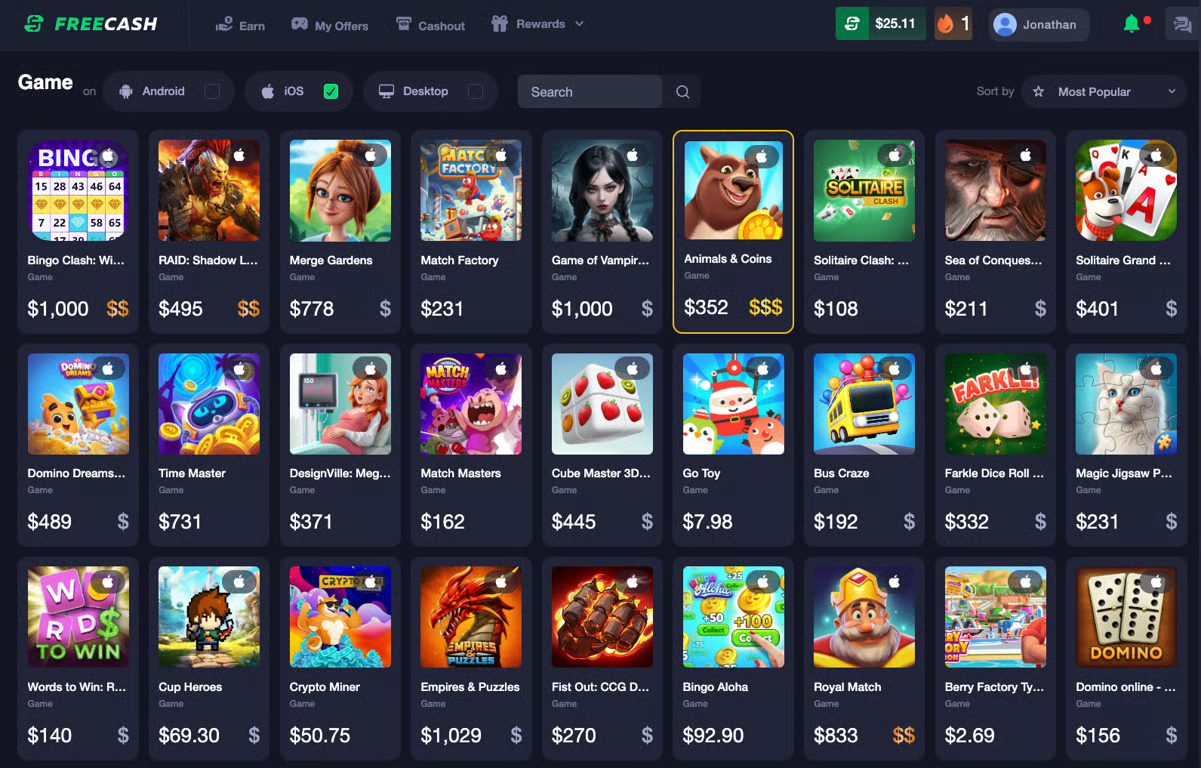
Focus on:
- App installs
- Game testing
- Featured offers
Step 3: Follow Instructions Carefully
Each task has specific requirements. Completing them correctly ensures you get paid.
Step 4: Build a Daily Routine
Consistency is key. Even 30–60 minutes daily can build steady income.
Step 5: Withdraw Your Earnings
Once you reach the minimum payout threshold, cash out via:
- PayPal
- Cryptocurrency
- Gift cards
Tips to Maximize Your Earnings
- Focus on high-reward offers first
- Complete tasks quickly and accurately
- Check the platform daily for new offers
- Take advantage of bonus events and streak rewards
- Join referral programs to earn passive commissions
Pros and Cons
Pros
✔ Free to start
✔ No experience required
✔ Flexible schedule
✔ Fast payouts
✔ Scalable with consistency
Cons
✖ Earnings vary by location
✖ Some offers take time to complete
✖ Not fully passive (requires initial effort)
In Summary
Testing apps with Freecash is one of the simplest ways to break into online income. It’s beginner-friendly, flexible, and requires no upfront investment—making it perfect for anyone looking to earn from home.
While it won’t replace a full-time income overnight, it can become a reliable side hustle and a stepping stone to more advanced passive income strategies.
Digital Products
Sell eBooks for Passive Income

Selling eBooks has become one of the most accessible and scalable ways to generate passive income online. With the rise of digital publishing platforms and global marketplaces, anyone with knowledge, creativity, or expertise can create and sell ebooks, earning income from readers around the world.
Unlike traditional publishing, where authors rely on publishing houses and physical bookstores, eBooks allow creators to publish instantly and reach millions of readers. Once the book is written and uploaded, it can continue generating income for months or even years with minimal ongoing effort.
For entrepreneurs, bloggers, and creators looking to build passive income streams, eBooks offer a powerful opportunity to turn knowledge into long-term digital assets.
In this guide, you’ll learn exactly how selling eBooks works, how to get started, how much you can earn, and how to build a profitable eBook publishing strategy.
What Are eBooks?

An eBook (electronic book) is a digital version of a book that can be read on devices such as smartphones, tablets, laptops, or dedicated eReaders.
Popular platforms like Amazon Kindle, Apple Books, and Google Play Books allow authors to sell their digital books to readers worldwide. Because eBooks don’t require printing or shipping, the overhead costs are extremely low, making them an ideal passive income opportunity.
Many creators write eBooks about topics they already understand well, such as:
- Personal finance
- Online business
- Fitness
- Travel guides
- Career advice
- Self-improvement
- Digital marketing
- Remote work
Once the eBook is published, it becomes a digital product that can generate income repeatedly without requiring constant work.
Why Selling eBooks Is a Great Passive Income Idea

There are several reasons why eBooks are considered one of the best passive income opportunities online.
Low Startup Costs
Unlike physical products or businesses that require inventory, writing an eBook costs almost nothing to start. All you need is knowledge, a computer, and time to write.
Unlimited Scalability
Once your eBook is published, it can be sold an unlimited number of times without additional production costs.
Global Reach
Platforms like Amazon Kindle allow authors to reach readers worldwide.
High Profit Margins
Because there are no manufacturing costs, profit margins are significantly higher than traditional products.
Long-Term Income Potential
Many authors earn royalties for years after publishing their books.
How Much Money Can You Make Selling eBooks?

Income from eBooks varies depending on the niche, marketing strategy, and quality of the content.
Some beginner authors earn a few hundred dollars per month, while successful digital publishers generate thousands of dollars monthly from their book catalogs.
Typical eBook pricing ranges from:
- $2.99 to $9.99 for most nonfiction books
- $0.99 for promotional pricing
- $10+ for specialized or professional content
Amazon Kindle offers royalty rates of up to 70% per sale, which means a $9.99 book could generate about $7 in royalties.
For example:
- 10 sales per day = about $70/day
- 300 sales per month = about $2,100/month
With multiple books published, income can grow significantly.
Best Platforms to Sell eBooks

Several platforms make it easy to publish and sell eBooks.
Amazon Kindle Direct Publishing (KDP)
Amazon KDP is the largest eBook marketplace in the world. Authors can publish books quickly and reach millions of readers.
Benefits:
- Massive global audience
- Up to 70% royalties
- Easy publishing process
Apple Books
Apple’s digital bookstore allows authors to sell books directly to Apple users worldwide.
Google Play Books
Google’s publishing platform allows authors to distribute books to Android users.
Gumroad
Gumroad allows creators to sell eBooks directly to their audience.
Payhip
Another platform for selling digital products and eBooks directly.
Many successful authors publish on multiple platforms to maximize sales.
Step-by-Step Guide to Creating an eBook

1. Choose a Profitable Topic
Start by identifying a topic that solves a problem or teaches a valuable skill.
Popular eBook niches include:
- Passive income
- Online business
- Personal finance
- Self-improvement
- Remote work
- Health and wellness
Research keywords and market demand before writing.
2. Outline Your Book
Create a clear structure for your book before writing.
Example outline:
Introduction
Chapter 1 – Understanding the topic
Chapter 2 – Getting started
Chapter 3 – Advanced strategies
Chapter 4 – Common mistakes
Conclusion
A structured outline makes writing much easier.
3. Write the Content
Focus on providing valuable and actionable information.
Good eBooks:
- Solve a clear problem
- Teach practical strategies
- Provide step-by-step guidance
Aim for 5,000–15,000 words for most nonfiction eBooks.
4. Design a Professional Cover
Book covers significantly influence sales.
Professional covers:
- Grab attention
- Clearly communicate the topic
- Look polished and credible
Many authors hire designers or use tools like Canva to create covers.
5. Format the Book
Your book must be formatted correctly for digital reading devices.
Common formats include:
- EPUB
- MOBI
Amazon KDP provides tools to help with formatting.
6. Publish the eBook
Upload your book to your chosen publishing platform.
You’ll need to add:
- Book title
- Description
- Keywords
- Categories
- Cover image
- Pricing
Once approved, the book becomes available to readers worldwide.
How to Market Your eBook
Publishing your book is only the first step. Successful authors actively promote their books.
Blogging
Writing blog posts related to your book topic can drive traffic and sales.
Social Media
Share valuable tips from your book on platforms like Instagram, Twitter, and LinkedIn.
Email Marketing
Building an email list allows you to promote future books directly to readers.
YouTube
Many authors promote their books through educational videos.
Amazon SEO
Optimizing your book title, description, and keywords improves discoverability.
Tips for Building Long-Term eBook Income
Publish Multiple Books
Successful authors often build a catalog of books that generate combined income.
Focus on Evergreen Topics
Books about timeless subjects can generate income for years.
Build an Audience
An audience of readers significantly increases future sales.
Create Companion Products
Courses, templates, and memberships can complement your book.
Common Mistakes to Avoid
Writing Without Market Research
Always verify demand before choosing a topic.
Poor Cover Design
A weak cover can reduce sales dramatically.
Ignoring Marketing
Even great books need promotion.
Pricing Too High or Too Low
Test different price points to find what works best.
In Summary
Selling eBooks is one of the most powerful passive income strategies available today. With minimal startup costs and unlimited scalability, it allows creators to turn knowledge into digital products that generate income over time.
By choosing the right topic, creating valuable content, and promoting your book effectively, you can build a profitable digital publishing business.
Many successful online entrepreneurs began their passive income journey with a single eBook.
If you’re looking for a flexible, scalable, and beginner-friendly way to earn passive income, publishing eBooks is an excellent place to start.
Digital Products
Create Online Courses for Passive Income

Creating online courses has become one of the most profitable and scalable passive income opportunities available today. As more people turn to the internet to learn new skills, demand for high-quality online education continues to grow rapidly.
Online courses allow creators to turn their knowledge into digital products that can be sold repeatedly. Once a course is created and uploaded to a learning platform, students can enroll at any time, allowing the creator to earn income long after the course has been produced.
From business skills and marketing to fitness training, language learning, and creative skills, there are thousands of topics that people are willing to pay to learn online.
For entrepreneurs, bloggers, educators, and professionals, online courses represent a powerful way to build a sustainable passive income stream while helping others learn valuable skills.
This beginner guide explains how online courses work, how to create one, how much you can earn, and how to turn your expertise into a profitable digital asset.
What Are Online Courses?

An online course is a structured digital learning program designed to teach a specific skill or subject through video lessons, written material, quizzes, and assignments.
Students access the course through a learning platform or website where they can watch lessons, download resources, and complete exercises.
Unlike traditional teaching methods, online courses allow learners to study at their own pace from anywhere in the world.
Common course formats include:
- Video lessons
- Slide presentations
- Downloadable worksheets
- Quizzes and assessments
- Interactive assignments
- Community discussions
Once the course is published, it can be sold repeatedly without needing to create it again.
Why Online Courses Are a Powerful Passive Income Stream

Online courses offer several advantages compared to other digital products.
High Demand for Online Education
Millions of people search online every day to learn new skills, advance their careers, or start businesses.
Scalable Income Model
Once the course is created, you can sell it to unlimited students without additional production costs.
High Profit Margins
Digital courses require little overhead compared to physical products.
Authority Building
Teaching online establishes you as an expert in your niche.
Flexible Business Model
Courses can be sold as one-time purchases or subscription memberships.
How Much Money Can You Make With Online Courses?

Earnings from online courses vary widely depending on the niche, marketing strategy, and course quality.
Typical course prices include:
- Beginner courses: $20–$100
- Intermediate courses: $100–$500
- Premium courses: $500–$2,000+
For example:
A course priced at $100:
- 10 sales per week = $1,000
- 100 sales per month = $10,000
Many successful creators build multiple courses, creating a library of digital education products that generate recurring income.
Best Platforms to Sell Online Courses

Several online learning platforms make it easy to publish and sell courses.
Udemy
One of the largest online learning platforms with millions of students.
Benefits include:
- Built-in audience
- Easy course hosting
- Global reach
Teachable
Teachable allows creators to build their own branded course websites.
Benefits:
- Full control of pricing
- Custom branding
- Integrated payment systems
Kajabi
Kajabi is a premium platform that combines course hosting, marketing tools, and membership systems.
Skillshare
Skillshare pays instructors based on student watch time and engagement.
Gumroad
Creators can sell courses directly to their audience without relying on a marketplace.
Step-by-Step Guide to Creating an Online Course

1. Choose a Profitable Course Topic
The best online courses solve a specific problem or teach a valuable skill.
Popular course niches include:
- Digital marketing
- Affiliate marketing
- Graphic design
- Programming
- Photography
- Personal finance
- Fitness training
- Language learning
Choose a topic where you have knowledge and where there is strong demand.
2. Research Course Demand
Before creating your course, research whether people are already searching for that topic.
Ways to validate your idea include:
- Searching course platforms
- Reviewing student demand
- Checking keyword search trends
- Studying competitor courses
This helps ensure there is an audience willing to pay for your course.
3. Outline Your Course Structure
Organizing your course into modules makes it easier for students to follow.
Example structure:
Module 1 – Introduction
Module 2 – Foundations
Module 3 – Step-by-step strategy
Module 4 – Advanced techniques
Module 5 – Implementation and results
Each module should contain short, focused lessons.
4. Record Course Lessons
You don’t need expensive equipment to start.
Basic tools include:
- A computer
- Screen recording software
- A microphone
- A webcam (optional)
Many courses are created using slide presentations and screen recordings.
Focus on clear explanations and practical examples.
5. Create Supporting Materials
Providing additional resources increases the value of your course.
Examples include:
- Worksheets
- Templates
- Checklists
- Resource lists
- Case studies
These materials help students apply what they learn.
6. Upload and Publish Your Course
Once your content is ready, upload your course to your chosen platform.
You will need to add:
- Course title
- Course description
- Lesson videos
- Downloadable resources
- Pricing information
After publishing, students can begin enrolling.
How to Market Your Online Course
Creating the course is only the first step. Successful course creators focus heavily on promotion.
Blogging
Writing educational blog posts about your course topic can attract students.
YouTube
Tutorial videos can introduce viewers to your expertise and lead them to your course.
Social Media
Share helpful tips related to your course topic.
Email Marketing
An email list allows you to promote your course directly to interested audiences.
Affiliate Marketing
Partner with influencers or bloggers who can promote your course for commissions.
Tips for Building a Successful Course Business
Focus on Student Results
Courses that deliver real value get positive reviews and referrals.
Keep Lessons Short and Clear
Short lessons are easier for students to follow and complete.
Update Your Courses
Regular updates keep your course relevant and competitive.
Create Multiple Courses
Building a catalog of courses increases your passive income potential.
Common Mistakes to Avoid
Choosing Topics Without Demand
Research the market before creating your course.
Overcomplicating the Content
Focus on practical lessons that students can implement.
Poor Audio Quality
Clear sound quality is more important than video quality.
Lack of Promotion
Marketing plays a major role in course sales.
In Summary
Online courses have transformed how people learn and how experts monetize their knowledge. By creating a high-quality course that solves real problems, you can build a digital product that generates income long after it’s published.
The most successful course creators treat their courses as long-term assets. With consistent marketing, student engagement, and content updates, a single course can become a powerful passive income stream.
If you’re looking for a scalable online business that allows you to share your knowledge while earning income, creating online courses is one of the best opportunities available.

What Is Passive Income? Myths & How It Works

Test Apps & Games – Earn Up to $300 Per Test

Sell eBooks for Passive Income

Create Online Courses for Passive Income

Start a Blog for Passive Income

Build a Niche Website for Passive Income
Start a Blog for Passive Income
Sell eBooks for Passive Income
Build a Niche Website for Passive Income

Start a Faceless YouTube Channel for Passive Income
Create Online Courses for Passive Income
What Is Passive Income? Myths & How It Works
-
 Digital Products5 months ago
Start a Blog for Passive Income
-
Digital Products5 months ago
Sell eBooks for Passive Income
-
Affiliate Marketing6 months ago
Start a Faceless YouTube Channel for Passive Income
-
1. Getting Started5 months ago
What Is Passive Income? Myths & How It Works
-
Digital Products6 months ago
Sell Stock Photography for Passive Income
-
Digital Products5 months ago
Sell Printables for Passive Income
-
Digital Products5 months ago
Create Online Courses for Passive Income
-
Digital Products6 months ago
Create Audiobooks for Passive Income


